
In the previous article, we reviewed the claims about who Jesus was from the biblical prophets, disciples, and early church leaders. In this last article, we will examine what the angels and God the Father declare about the identity of Jesus as recorded in the Bible. We will also take a close look at what Jesus claimed to be.
Christians and non-Christians alike have always held a fascination with the heavenly angels and their role throughout mankind’s history. We don’t really know much about them, but on occasion, God has directed them to interact with humans to reveal to us some very remarkable truths about his Son Jesus. Let’s see what we can uncover.
Who did the Angels claim Jesus to be?
In the gospel of Luke we can read that Mary, to be the mother of Jesus, was visited by the angel Gabriel. The angel said to Mary, “You will conceive and give birth to a son, and you are to call him Jesus. He will be great and will be called the Son of the Most High. The Lord God will give him the throne of his father David, and he will reign over Jacob’s descendants forever; his kingdom will never end.” The angel answered, “The Holy Spirit will come on you, and the power of the Most High will overshadow you. So the holy one to be born will be called the Son of God.” (Luke 1:31-33, 35) These proclamations affirm both His name as Jesus and His identity as the messianic King, Son of the Most High, Son of God, and heir of David’s throne.
In another event, when Mary had given birth to Jesus, an angel appeared to the shepherds watching over their flock at night near the town of Bethlehem. When the shepherds saw the angel, they were terrified, but the angel told them not to worry because he had great news for them. “Today in the town of David a Savior has been born to you; he is the Messiah, the Lord” (Luke 2:11). This announcement highlights His birth, affirms His identity as the Messiah—the promised one—and proclaims that His coming brings good news of great joy for all people.
Regarding the adoration and esteem the angels revealed in these passages, Larry Weir Hurtado, who was a New Testament scholar and historian of early Christianity, remarked in his book Lord Jesus Christ: Devotion to Jesus in Earliest Christianity, “The reverence offered to Jesus by heavenly beings, including angels, reflects a devotional pattern that would have been unthinkable within Jewish monotheism if Jesus were understood merely as an exalted human or angelic figure.”[i]
In another account, on the dawn of the first day of the week after Christ’s crucifixion, we learned that Mary Magdalene and Mary, the mother of James and Joses, went to look at the tomb where Jesus was buried. When an angel appeared to them, “The angel said to the women, “Do not be afraid, for I know that you are looking for Jesus, who was crucified. He is not here; he has risen, just as he said. Come and see the place where he lay.” (Matthew 28:5-6) In this event the angel of the Lord affirmed to the women that Jesus was crucified and that he had been resurrected, just as he had testified to the disciples.
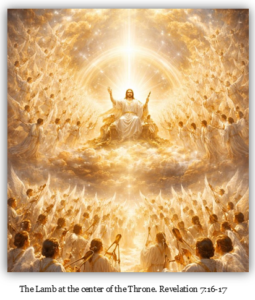
In the Book of Revelation there are multiple events recorded where angels speak to the divine status of Jesus. In chapter 5 the author John records a large number of angels, thousands upon thousands and ten thousand upon ten thousand, proclaiming, “Worthy is the Lamb, who was slain, to receive power and wealth and wisdom and strength and honor and glory and praise!” (Revelation 5:12b) From the perspective of the author John, Jewish theology held that worship was reserved for God alone. Therefore, when these angels were worshipping the Lamb of God, they were equating Jesus to God himself, which was significant. Gregory Kimball Beale, a biblical scholar and professor of New Testament and biblical theology at Reformed Theological Seminary in Dallas, Texas, assesses the reverence shown to Jesus this way: “The angels’ acclamation of the Lamb in Revelation 5 demonstrates that Christ shares in the sovereignty, glory, and worship due exclusively to God. John presents no hesitation in placing Jesus within the sphere of divine honor.”[ii]
In another passage in the Book of Revelation, John describes an exchange with an angel in which the angel explains who God’s people are who came out of the great tribulation and then proclaims, “Never again will they hunger; never again will they thirst. The sun will not beat down on them,’ nor any scorching heat. For the Lamb at the center of the throne will be their shepherd; ‘he will lead them to springs of living water.’ ‘And God will wipe away every tear from their eyes.” (Revelation 7:16-17) This is an intriguing passage where this angel places the Lamb (Jesus) at the center of the throne and identifies him as the shepherd of his people, then as their God who will wipe away every tear from their eyes. This strikes at the core of trinity theology, where there is one God but three distinct persons in God.
N. T. Wright is an English New Testament scholar, Pauline theologian, and Anglican bishop. He was the bishop of Durham and Lord Spiritual in the UK Parliament from 2003 to 2010. Regarding the praises offered to the Lamb in this passage of Revelation, N. T. Wright states, “When angels in Revelation praise the Lamb, they are not revising Jewish monotheism but redefining it around Jesus. The Lamb is not an intermediary being; he stands within the very identity of Israel’s God.”[iii]
 There are many other verses in Revelation spoken by God’s angels that address the substance and essence of Jesus.[iv] From the passages cited above, careful discernment shows that the angels regarded Jesus as more than a righteous man. They proclaim him as the Savior of mankind, the Son of God, and even as God himself. From the birth of Jesus through the culmination of history, Scripture records angels consistently proclaiming a unified understanding of the identity of the man called Jesus.
Who does God claim Jesus to be?
Thus far we have read and studied what the biblical prophets, disciples, early church fathers, and the heavenly angels have remarked about this man Jesus. But what about God the Father’s claims? God’s thoughts and proclamations about the nature of Jesus would incontestably supersede any other voice on earth as well as in heaven. Well, let’s see what we can find.
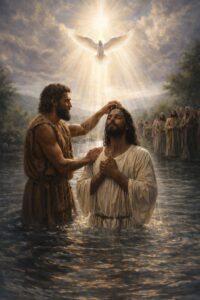
Surveying the Bible, we can find several instances where God described the essence of Jesus and God’s relationship to him. In one such example in the Gospel of Matthew, we find Jesus coming from Galilee to the Jordan River to be baptized by John the Baptist. But John attempted to prevent him, insisting that he himself needed to be baptized by Jesus. But Jesus convinced John that Jesus needed to be baptized to fulfill all righteousness. “As soon as Jesus was baptized, he went up out of the water. At that moment heaven was opened, and he saw the Spirit of God descending like a dove and alighting on him. And a voice from heaven said, “This is my Son, whom I love; with him I am well pleased.” (Matthew 3:16-17) God the Father used this occasion to affirm his relationship with Jesus as his son and to declare his love and admiration for him. Throughout mankind God had never proclaimed any other man on earth to be his Son! This event is recorded in all the synoptic gospels, including Mark 1:11 and Luke 3:22.
D. A. Carson, a Distinguished Emeritus Professor of New Testament at Trinity Evangelical Divinity School and president and co-founder of the Gospel Coalition, comments about this passage, “The voice is God’s (“from heaven”) and testifies that God himself has broken silence and is again revealing himself to men—a clear sign of the dawning of the Messianic Age.”[v]
 In another instance in the Book of Psalms, God speaks through his prophet David, pronouncing the following words: “I will proclaim the Lord’s decree: He said to me, ‘You are my son; today I have become your father.’” (Psalm 2:7) Frank Derek Kidner was a British Old Testament scholar who commented on this passage as follows: “In Psalm 2:7 (‘I will proclaim the LORD’s decree: He said to me, “You are my son; today I have become your father”’), the psalmist expresses the unique relationship between God and the king of Israel. This ‘sonship’ is symbolic of the king’s divine appointment and authority, rather than a literal begetting, a concept that later Christian interpretation applies to the Messiah, Jesus.”[vi]
A similar declaration is repeated in Hebrews, where the author writes, “In the same way, Christ did not take on himself the glory of becoming a high priest. But God said to him, You are my Son; today I have become your Father.” (Hebrews 5:5) In the Old Testament, no priest could claim the role for himself. Only God could appoint a priest. In the same way, God appointed Jesus to be a priest and a king, one that would rule his people forever. But God proclaimed Jesus more than just a priest and king; he declared Jesus was his divine son! This statement is profound because it establishes the true nature of Jesus as God’s heavenly Son who came down to earth to fulfill his ministry as priest and king.
Arguably, the most striking moment in which God the Father revealed the true nature and authority of His Son is the event scholars refer to as the Transfiguration. On this occasion, Jesus took Peter, James, and John into the mountains and was miraculously transfigured before them. The word “transfigured” in the Greek language is “metamorphōthē,” from which we get the word “metamorphosis.” In the same way a caterpillar becomes transformed into a butterfly to reveal its true nature, Jesus changed in appearance, and his face shone like the sun in a way that revealed his divine reality. The dumbfounded disciples witnessed Jesus in his full glory talking to Moses and Elijah. Not knowing what to say, Peter impulsively suggested building a shelter for the three of them, when, “While he was still speaking, a bright cloud covered them, and a voice from the cloud said, “This is my Son, whom I love; with him I am well pleased. Listen to him!” When the disciples heard this, they fell facedown to the ground, terrified. But Jesus came and touched them. “Get up,” he said. “Don’t be afraid.” When they looked up, they saw no one except Jesus” (Matthew 17:5-8) This was an amazing event where God revealed to these three disciples the glorious presence of his son whom he deeply loved, Jesus’ eternal honor and glory, and the authority to speak on God’s behalf.
Richard Thomas France (1938–2012) was a New Testament scholar and Anglican cleric who captured the significance of the transfiguration experience in the following words: “The transfiguration is not a change in Jesus so much as a disclosure of who he already is. What is normally hidden is briefly revealed: the glory that belongs to him as God’s Son.”[vii] Leander E. Keck, Professor of Biblical Theology Emeritus at Yale Divinity School, commented that this transfiguration is more of a revelation than a transformation. For it revealed to Peter, John, and James a glimpse of Jesus’ true identity and glory, which was hidden during his earthly ministry.[viii] Later in their ministry, Peter and John would mention Jesus’ transfiguration experience in their writings: Peter’s second letter (2 Peter 1:16) and John’s gospel (John 1:14).
In conclusion, this evidence we have uncovered leaves us with a clear understanding of God’s claims about his Son, Jesus. In his own words, God the Father describes Jesus as his divine Son whom he deeply loves, who has the authority to speak on behalf of the Father, and who was anointed the Davidic King and High Priest. In Jesus’ Baptism and Transfiguration, God speaks audibly from heaven to the three disciples: “This is my Son, whom I love; with him I am well pleased.” “Son” here is not a general or adoptive title. Jesus’ sonship implies shared authority, glory, and nature (Matthew 17:5). Jewish leaders understood this claim as making Himself equal with God.
Consider this: in the previous article we learned that “All Scripture is God-Breathed” (2 Timothy 3:16), and therefore it stands to reason that God not only permitted but also inspired the biblical authors to write these words about the claims of Jesus. Therefore, God himself testifies to all of the claims about his Son that we read about in the Bible. All the claims about Jesus being the King of Israel, the Messiah to bring salvation, the Son of Man and Son of God, and yes, even God himself. That’s a pretty remarkable and profound theological proclamation!
Who does Jesus claim to be?
Finally, I would like for us to examine Jesus’ self-claims regarding his identity. What can we find in the Scripture about Jesus’ statements regarding his individuality? As we think back through this article series about all the claims given by others in reference to Jesus, let’s take a moment to better understand what these declarations mean.
God: As we learned in the Nicene Creed, God is defined as a single entity comprised of three persons: God the Father, God the Son, and God the Holy Spirit. The Scriptures testify to this, although in reality we who are finite are unable to fully comprehend the infinite nature of God.
Son of God: Refers to Jesus’ divine origin, his relationship to the Father, and the divine authority given to him by the Father to forgive sins, command nature, and grant eternal life.
Son of Man: This term originated from the Old Testament with a complexity that fully developed in the teachings of Jesus. In the Old Testament “son of man” was often used to represent a human being or mortal. (Psalm 8:4) In the Book of Ezekiel, God addresses the prophet Ezekiel more than 90 times in this manner. But from Daniel’s apocalyptic vision we read, “I saw one like a son of man, coming with the clouds of heaven. He approached the Ancient of Days and was given authority, glory and sovereign power; all nations and peoples of every language worshiped him.” (Daniel 7:13-14) Here this Son of Man possessed both human and divine qualities. In the New Testament this title simultaneously points to Jesus’ human experience, his suffering, and his divine authority. Used together, they present a complete Christology consistent with the witness of Scripture.
King: This name signifies the Davidic King (2 Samuel 7:12-16) that will rule his people through eternity. This is a heavenly kingdom established by God.
Messiah: Someone chosen and anointed by God for a specific redemptive purpose. The term “Messiah” comes from the Hebrew term meaning “anointed one.”
Savior: Refers to a person who delivers, rescues, or brings salvation. In the New Testament this savior is the Messiah, who will bring Israel to repentance and save them from eternal death.
Authority: A person chosen by God to speak on his behalf and accomplish his purposes among the people on earth. This power comes from God into the hands of this chosen individual.
Lord: In the simplest usage, “lord” refers to someone of superior status, such as a landowner or ruler. In biblical terms, this title comes from the Hebrew term Adonai, which means “lord” or “master.” Lord represents authority, ownership, and divine identity.
Jesus is the Son of God
I want to provide you with two clear admissions from Jesus about his identity, then offer a larger set of Bible verses that paints a bigger picture of the nature and purpose of Christ. The first admission is taken from the Gospel of Matthew, where Jesus asks his disciples, “But what about you?” he asked. “Who do you say I am? Simon Peter answered, “You are the Messiah, the Son of the living God.”” (Matthew 16:15-16) We discussed this encounter with Peter in the last article.
But listen to Jesus’ reply: “Jesus replied, “Blessed are you, Simon son of Jonah, for this was not revealed to you by flesh and blood, but by my Father in heaven.” (Matthew 16:17) Jesus did not scold or correct Peter’s identification of his rabbi but instead commended Peter for receiving this revelation from God the Father in Heaven. Jesus was, in effect, validating Peter’s claim that He was the Messiah and Son of God.
Jesus is God
On a second occasion, the apostle John recorded an event where some of the Jews were arguing with Jesus at the temple and accusing him of being demon-possessed. In reply, Jesus admitted that Abraham, the father of the Jewish people, rejoiced at seeing him. The crowd was shocked since they knew Jesus was not 50 years old and Abraham had died approximately 2000 years before the birth of Christ. But Jesus was talking about his encounter with Abraham in heaven. John recorded the crowd’s response: “You are not yet fifty years old,” they said to him, “and you have seen Abraham!” “Very truly I tell you,” Jesus answered, “before Abraham was born, I am!” At this, they picked up stones to stone him, but Jesus hid himself, slipping away from the temple grounds.” (John 8:57-59) Upon hearing Jesus’ reply, the Jews were incensed, recognizing that He was claiming to be the ‘I AM’… God Himself!
Andreas J. Köstenberger is an Austrian-American biblical scholar who was a research professor at Midwestern Baptist Theological Seminary. He commented in his manuscript titled John that Jesus’ “I AM” statement professed a direct claim to deity. There is no doubt that the Jewish opponents recognized Jesus’ divinity claim and attempted to stone him for shocking blasphemy.[ix] In these two remarkable biblical passages, Jesus has claimed to be the Son of God and to be God himself.
As we complete this article series, I would like to share with you several other verses in the Bible that reveal Jesus affirming the roles and titles shared with the Father, acknowledged by the prophets, embraced by his disciples, taught by the Church, and proclaimed by the angels. I have compiled a list (not at all exhaustive) of gospel references (see below) in Table 1, Jesus’ Self-Claims from the Gospels, which contains 67 verses of Jesus’ statements about who he claims to be. This table contains the gospel locations and brief descriptions of each statement and the title Jesus used to identify himself. I encourage you to spend time over the coming week to review this list to gain a better understanding of the nature of our Lord Jesus.
I have also created Table 2, Sources and Claims About Jesus (see below), which summarizes the sources we have studied in this series and the claims they make about Jesus. This table should give you a sense of how consistent these sources are in their portrayal of Jesus Christ.
Conclusion
Some of you may still harbor some doubt about the truth of Jesus as the Son of God and God. You may view him as a ‘good person’ but not as our Lord God. If that is the case, let me leave you with a quote from C. S. Lewis, a British author, scholar, and Anglican lay theologian. “I am trying here to prevent anyone saying the really foolish things that people often say about Him: “I’m ready to accept Jesus as a great moral teacher, but I don’t accept His claim to be God.” That is the one thing we must not say. A man who was merely a man and said the sort of things Jesus said would not be a great moral teacher. He would rather be a lunatic—on a level with the man who says he is a poached egg—or else he would be the Devil of Hell. You must make your choice. Either this man was, and is, the Son of God, or else a madman or something worse. You can shut Him up for a fool, you can spit at Him and kill Him as a demon, or you can fall at His feet and call Him Lord and God. But let us not come with any patronizing nonsense about His being a great human teacher. He has not left that open to us. He did not intend to.”[x]
So, what is this man Jesus to you: a lair, a lunatic, or your Lord and God?
I hope this series has deepened your spiritual understanding of Jesus—the one who is our
Creator, our Savior, our eternal King, our Lord and our God!
ENDNOTES
[i] Hurtado, Larry W. Lord Jesus Christ: Devotion to Jesus in Earliest Christianity. Grand Rapids, MI: Eerdmans, 2003, 591.
[ii] Beale, G. K. The Book of Revelation: A Commentary on the Greek Text. New International Greek Testament Commentary. Grand Rapids, MI: Eerdmans, 1999, 360.
[iii] Wright, N. T. Revelation for Everyone. Louisville, KY: Westminster John Knox Press, 2011, 63.
[iv] Additional references of Angels addressing the nature of Jesus in the Book of Revelation:
- Angels affirm salvation belongs to God and the Lamb. Revelation 7:9-10
- Angel distinguishes himself from Jesus Revelation 19:9-10
- Angels acknowledge the Lamb as divine presence Revelation 21:22-23
- The Lamb shares God the Father’s throne Revelation 22:1-3
[v] D. A. Carson, “Matthew,” in The Expositor’s Bible Commentary, vol. 8, ed. Frank E. Gaebelein (Grand Rapids: Zondervan, 1984), 108.
[vi] Kidner, Derek. Psalms 1–72: An Introduction and Commentary. Tyndale Old Testament Commentary. Downers Grove, IL: InterVarsity Press, 1973, 97.
[vii] France, R. T. The Gospel of Matthew. New International Commentary on the New Testament. Grand Rapids, MI: Eerdmans, 2007, 646.
[viii] Keck, Leander E., ed. The New Interpreter’s Bible, vol. 8. Nashville: Abingdon Press, 1995, 363.
[ix] Andreas J. Köstenberger, John, Baker Exegetical Commentary on the New Testament, BECNT (Grand Rapids: Baker Academic, 2004), 272.
[x] C. S. Lewis, Mere Christianity (New York: Macmillan, 1952), 55-56.