
In our last article, we reviewed a number of secular claims about Jesus from the early church historians and contemporary scholars. In this article we will spend some time discovering what the Old Testament prophets prophesized about Jesus. In addition, we will read about the thoughts of Jesus’ disciples who spent over three years living with him and witnessed his teachings and behaviors. We will also explore how the early church perceived Jesus amid decades of theological challenges from heretical movements. This period led to the establishment of a unified understanding of his nature that has stood the test of time for over seventeen hundred years.
Where did the prophet’s spoken words originate?
Before we launch into an investigation of the Old Testament prophet’s prophetic claims about Jesus, it would be helpful to better understand where these prophecies originated. Were they merely products of the thoughts and impressions of ordinary men, or was something more at work?
Scripture answers this question decisively through several passages. For example, the apostle Peter stated to his readers, “Above all, you must understand that no prophecy of Scripture came about by the prophet’s own interpretation of things. For prophecy never had its origin in the human will, but prophets, though human, spoke from God as they were carried along by the Holy Spirit.” (2 Peter 1:20-21) In this passage, Peter draws a direct connection between the prophet’s spoken prophecy and its ultimate origin: God the Father.
In another passage where the source of Scripture’s text is addressed, Paul, in his second letter to Timothy, writes, “All Scripture is God-breathed and is useful for teaching, rebuking, correcting and training in righteousness.” (2 Timothy 3:16) In this passage, the apostle Paul identifies all scripture, including those words spoken by the Old Testament prophets, as originating from the thoughts and inspiration of God the Father.
What did the prophets in the Old Testament claim Jesus to be?
We can find a multitude of Old Testament prophets who foretold events about Jesus. Here is a sample that speaks to his nature.
Moses foretells the Christ who will ultimately defeat evil. “And I will put enmity between you and the woman, and between your offspring and hers; he will crush your head, and you will strike his heel.” (Genesis 3:15) These words are spoken by God to the serpent after the fall of Adam and Eve. On the surface, it explains the ongoing hostility between humans and the serpent. But the verse moves from a natural curse to a spiritual one. The serpent’s strike corresponds to Christ’s suffering and death. The crushing of the serpent’s head points to Christ’s victory over sin, death, and Satan (Hebrews 2:14; Romans 16:20). God anoints Jesus as the Messiah to rescue humanity from the death of Satan. In another Bible verse Moses proclaims a supreme prophet (Jesus) who will be the authoritative voice of God. “The Lord your God will raise up for you a prophet like me from among you, from your fellow Israelites. You must listen to him.” (Deuteronomy 18:15)
Isaiah identifies Jesus as the divine and eternal king. One who is titled Mighty God and Everlasting Father. You may be familiar with this passage being read often during the Christmas season. Isaiah writes, “For to us a child is born, to us a son is given, and the government will be on his shoulders. And he will be called Wonderful Counselor, Mighty God, Everlasting Father, Prince of Peace. Of the greatness of his government and peace there will be no end. He will reign on David’s throne and over his kingdom, establishing and upholding it with justice and righteousness from that time on and forever. The zeal of the Lord Almighty will accomplish this.” (Isaiah 9:6-7) Isaiah prophesizes about Jesus, who will eventually bring peace into our world as an Everlasting Father and Mighty God. Isaiah also describes Jesus in human form, born of a virgin, who is to be named Immanuel (God with us). The prophet Isaiah writes, “Therefore the Lord himself will give you a sign: The virgin will conceive and give birth to a son, and will call him Immanuel.” (Isaiah 7:14) This verse, as well as others, identifies Jesus as human and divine, as man and God.
Jeremiah declares Jesus as a righteous King and Savior. “The days are coming,” declares the Lord, when I will raise up for David a righteous Branch, a King who will reign wisely and do what is just and right in the land. In his days Judah will be saved and Israel will live in safety. This is the name by which he will be called: The Lord Our Righteous Savior.” (Jeremiah 23:5-6)
Ezekiel describes Jesus as the true shepherd king. “I will place over them one shepherd, my servant David, and he will tend them; he will tend them and be their shepherd. I the Lord will be their God, and my servant David will be prince among them. I the Lord have spoken.” (Ezekiel 34:23-24) At first glance, it appears that the prophet is talking about David the King, but since David had been dead for centuries (about 400 years), it really refers to a future Davidic ruler, a descendant of the line of David, Jesus, who will shepherd over his people.
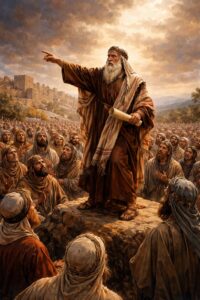 Micah prophesies that Jesus would be the eternal ruler, born in Bethlehem. “But you, Bethlehem Ephrathah, though you are small among the clans of Judah, out of you will come for me one who will be ruler over Israel, whose origins are from of old, from ancient times.” (Micah 5:2)
In summary, these Old Testament prophets, as well as many others, foretold about Jesus as a future Messiah and Son of God, Mighty God, King, and Savior, and even spoke about his birth, ministry, and death on the cross. Although these Old Testament prophets did not fully understand to whom these prophecies referred, they were faithful in recording God’s inspired thoughts about this man. Today we can look back and clearly see that they all pointed to Jesus Christ. Over the centuries, these prophets had woven a tapestry of prophetic assertions that together painted a vivid and unmistakable picture of Jesus Christ as the Son of God, Messiah, Priest, King, and Savior of his people.
Who did Jesus’ disciples claim him to be?
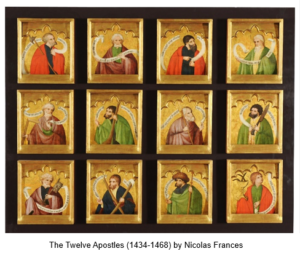
Throughout the second part of his ministry, Jesus had a large group of people who followed him, and many called themselves his disciples. But Jesus selected twelve men to be his apostles, and eleven were eventually destined to go out to the world to share the Kingdom of God and the gospel with others. During Jesus’ ministry these disciples were with him daily, tending to his needs, learning from him, and being spiritually shaped and honed for the future work they would be called to do. These hand-picked men, with the exception of Judas Iscariot, eventually came to love Jesus deeply and sacrificed their lives for him. Let’s read what some of these disciples claimed Jesus to be.
Peter, the leader of the disciples, was never timid about expressing this feeling and speaking the truth boldly. In Peter’s second letter to the churches, while defending the truth about Christ against the false teachers who were distorting the faith, he wrote, “For we did not follow cleverly devised stories when we told you about the coming of our Lord Jesus Christ in power, but we were eyewitnesses of his majesty. He received honor and glory from God the Father when the voice came to him from the Majestic Glory, saying, “This is my Son, whom I love; with him I am well pleased.” We ourselves heard this voice that came from heaven when we were with him on the sacred mountain.” (2 Peter 1:16-18) Peter clearly affirmed Jesus’ position as Lord and a person with the authority of the Heavenly Father. But Peter didn’t stop there: he identified Jesus as the Son of God! Can you imagine being called to be a disciple of Jesus, who you believed to be the Son of God?
There was another time when Peter clearly stated the identity of Jesus. It took place in the region of Caesarea Philippi, when Jesus had asked his disciples, “Who do people say the Son of Man is?” (Matthew 16:13b). Following their answers, Jesus looked at them as asked, “But what about you? Who do you say I am?” Simon Peter answered, “You are the Messiah, the Son of the living God.” (Matthew 16:15-16) Jesus’ reply was equally startling… For he disclosed that God the Father in Heaven had revealed this truth to Peter. Peter’s declaration and Jesus’ response made it clear to all who were there who Jesus was.
 John the apostle’s understanding of who Jesus was is equally remarkable. In the first verse of the first chapter of the Gospel of John, the author confesses to the eternal nature and full deity of Jesus when he states, “In the beginning was the Word, and the Word was with God, and the Word was God.” (John 1:1) In this verse, John declared Jesus to be the Word. In the New Testament world, the term “Word” (logos) was one of the most theologically loaded and culturally understood terms John could have chosen.
Justin C. Daniel, the author of Logos in Johannine Literature, writes, “John uses the word ‘logos’ to affirm Jesus’ deity… John personifies the Logos with an actual person… thus he establishes that the Logos and Jesus are synonymous with each other.”[i] Stated in an alternate way, the apostle John wasn’t simply giving Jesus a title; he was reaching into his culture’s worldview and saying, Everything you’ve ever believed about truth, wisdom, and the structure of reality ultimately points to Jesus as divine.
A few verses later in the same chapter, the apostle John writes, “The Word became flesh and made his dwelling among us. We have seen his glory, the glory of the one and only Son, who came from the Father, full of grace and truth.” (John 1:14) In this passage, John clearly connects the divinity of Jesus with the humanity of Jesus. Furthermore, John is boldly stating that he and others have seen this God-Man and experienced his grace and truth.
Nathanael immediately recognized Jesus as the Son of God during their first encounter. Early in Jesus’ ministry, the disciple Philip, already a follower of Christ, urged Nathanael to come and see for himself whether Jesus was the Messiah foretold by the prophets. The Bible tells us, “When Jesus saw Nathanael approaching, he said of him, “Here truly is an Israelite in whom there is no deceit.” “How do you know me?” Nathanael asked. Jesus answered, “I saw you while you were still under the fig tree before Philip called you.” Then Nathanael declared, “Rabbi, you are the Son of God; you are the king of Israel.” (John 1:47-49) In Nathanael’s life, there was a God Moment, where the disciple immediately recognized and acknowledged this man named Jesus as more than just a rabbi but the very Son of God and the eternal King of Israel.
Thomas is best known for his doubt and skepticism, but he ultimately expressed his profound faith in Jesus. Thomas’ doubt occurred after Jesus was resurrected from his tomb and was seen by the other disciples, who shared their experiences with Thomas. As the narrative goes, when they saw Thomas, they exclaimed to him, “‘We have seen the Lord!’ But he said to them, ‘Unless I see the nail marks in his hands and put my finger where the nails were, and put my hand into his side, I will not believe.’” (John 20:25)
A week later when Thomas was together with the other disciples, Jesus appeared to all of them and approached Thomas and said, ““Put your finger here; see my hands. Reach out your hand and put it into my side. Stop doubting and believe.” Thomas said to him, “My Lord and my God!” (John 20:27-28) Thomas had finally seen the glory of Jesus with his own eyes and touched him with his own hands and acknowledged that he was truly Lord and God.
Andrew was a disciple of John the Baptist. When John the Baptist saw Jesus, he proclaimed, “Look, the lamb of God!” (John 1:35b) Based on John the Baptist’s testimony, we are told that Andrew immediately sought his brother Simon (Peter) to tell him, “We have found the Messiah” (that is, the Christ). And he brought him to Jesus. (John 1:41b-42a) Andrew trusted John the Baptist’s word and faithfully knew that Jesus was the long-awaited Messiah the people of Israel were waiting for.
Paul was not one of the original twelve disciples chosen by Jesus, but on the road to Damascus (Acts 9), Jesus called him to be an apostle to share the gospel with gentiles in other nations. Paul was arguably one of the most influential and prolific apostles in the early church. Thirteen of the twenty-seven books of the New Testament are attributed to Paul, in which he consistently and forcefully proclaims Jesus as Lord, Savior, Messiah, and God.
Here are some assertions about Jesus from the apostle Paul’s writings. In his letter to the Romans, Paul proclaims, “If you declare with your mouth, ‘Jesus is Lord,’ and believe in your heart that God raised him from the dead, you will be saved.” (Romans 10:9) Paul clearly professes Jesus to be our Lord and savior, through the power of our faith in him. In his letter to the Galatians, Paul writes, “I have been crucified with Christ and I no longer live, but Christ lives in me. The life I now live in the body, I live by faith in the Son of God, who loved me and gave himself for me.” (Galatians 2:20) In this passage, Paul declares Jesus as the Son of God, who sacrificed his own life on the cross so that those who abide in him may have eternal life.
In his letter to his apprentice Titus, Paul asserts Jesus’ divinity as both our Savior from our sins and equal to God the Father. Paul writes, “…while we wait for the blessed hope—the appearing of the glory of our great God and Savior, Jesus Christ…” (Titus 2:13).
We can find overwhelming evidence in each of Paul’s thirteen letters and from the other disciples about who they acknowledged Jesus to be. To them Jesus was their friend, their teacher, their Lord, their Savior, the Christ, the Son of God and God himself.
When we also consider the intense persecution, suffering, and martyrdom most of these disciples endured while faithfully proclaiming the gospel throughout the world, their genuine faith and sincerity in what they believed becomes unmistakably clear. May our doubts and sacrifices be overshadowed by the living testimonies of these disciples.
Who did the Church claim Jesus to be?
The Church founded by Jesus Christ and his disciples grew exponentially after Pentecost Sunday. Unfortunately, throughout the early church history, there were a number of theological heresies created to attack the divine and human nature of Jesus. Many of the letters in the New Testament were written to defend the authority and nature of Jesus, as shown in the following table.
Heresies Addressed in New Testament
Heresy / Errors | What It Denied or Distorted | Key NT References (Book + Chapter/Verse) |
Docetism | Denied Jesus’ true humanity (only appeared human) | 1 John 1:1–3; 1 John 4:2–3; 2 John 7; Luke 24:39; Hebrews 2:14; Hebrews 4:15 |
Adoptionism | Denied Jesus’ eternal deity | John 1:1–3, 14; Colossians 1:15–19; Colossians 2:9; Philippians 2:6–11; |
Proto-Gnosticism | Denied true incarnation; diminished Christ | Colossians 1:15–20; Colossians 2:8–10; 1 Timothy 4:1–3; John 1:14 |
Christ-spirit theory | Separated Jesus from “the Christ” | 1 John 5:6; John 1:14; John 20:31; Colossians 2:9 |
Two-Person Christology | Divided Christ into two persons | Hebrews 2:14–17; Colossians 1:19; Colossians 2:9; John 10:30 |
Denial of the Resurrection | Rejected bodily resurrection | 1 Corinthians 15:12–20; Luke 24:36–43 |
Denial of Sonship | Denied Jesus as the Son of God | 1 John 2:22–23; Matthew 16:16–17; Hebrews 1:1–5 |
Here are a sample of quotes from early church fathers expressing their views of the man Jesus, in defense of the Catholic Church’s dogma. Pay close attention to the aspect(s) of Jesus’ nature they are addressing.
Ignatius of Antioch (c. 35–107 AD), on Jesus as both God and man, he wrote, “There is one Physician who is possessed both of flesh and spirit; both made and not made; God existing in flesh; true Life in Death; both of Mary and of God; first passible and then impassible, Jesus Christ our Lord.”[ii]
Irenaeus of Lyons (c. 130–202 AD) wrote the following about Christ being fully God and fully man: “For the Church … has received from the apostles … the faith in one … Jesus Christ, the Son of God, who became flesh for our salvation … to Jesus Christ our Lord and God and Savior and King … every knee shall bend of those in heaven and on earth and under the earth.”[iii]
Melito of Sardis (c. 180 AD), on the two natures of Christ wrote, “Being God and likewise perfect man, he gave positive indications of his two natures: … his deity … and his humanity … although he was the true God existing before the ages.”[iv]
Athanasius of Alexandria (c. 296–373 AD) wrote the following words about the Word becoming flesh while remaining divine: “The Word was not impaired in receiving a body … the Word, being God, became flesh, that, being put to death in the flesh, he might quicken all men by His own power.”[v]
While the early church leaders were successful in refuting these heretical attacks, it wasn’t until the First Council of Nicaea in AD 325 that the church leadership formulated and released a comprehensive statement called the Nicene Creed about the nature and essence of Jesus and his relationship with God the Father. In AD 381 at the First Council of Constantinople, the Nicene Creed was amended to provide additional information about the nature of Christ. In addition, the Council of Chalcedon in AD 451 affirmed the Nicene Creed and released a new document called the Chalcedonian Definition, which proclaimed Christ as both fully God and fully man. The texts from the Nicene Creed (AD 381)[vi] and Chalcedonian Definition[vii] (both translated into modern English) are included in the footnotes for your perusal.
Here are the key points about the nature of Jesus Christ from these theological manuscripts:
- Jesus is the only unique Son of God.
Jesus is eternal with the Father.
Jesus is coessential with the Father.
All things were made by Jesus.
Jesus came from heaven and was conceived by the Holy Spirit and born of a virgin.
Jesus is fully divine and fully human (Hypostatic Union).
Jesus lived without sin.
He was crucified and buried.
On the third day he was resurrected.
He sits on the right hand of the Father.
Through these writings and formal creeds, the early church leaders expressed a clear and succinct description of the nature and essence of Jesus Christ and his relationship with the Father. There is no doubt that the early Christian community believed Jesus to be God himself, yet fully divine and fully human.
ENDNOTES
[i] Justin C. Daniel, “Logos in Johannine Literature,” Justin Daniel, October 4, 2019, para. 1, https://www.justincdaniel.com/2019/10/04/logos-in-johannine-literature/
[ii] Ignatius of Antioch, Letter to the Ephesians 7:2, in The Apostolic Fathers, ed. and trans. Bart D. Ehrman et al. (Cambridge, MA: Harvard University Press, 2007).
[iii] Irenaeus, Against Heresies 1:10:1, in The Early Church Fathers: A Selection from the Writings of the Fathers from St. Clement of Rome to St. Athanasius, ed. Henry Bettenson (Oxford: Oxford University Press, 1970).
[iv] Melito of Sardis, fragment quoted in The Early Church Fathers on Jesus, RisenJesus.com, accessed January 2026.
[v] Athanasius of Alexandria, Against the Arians, in Nicene and Post‑Nicene Fathers, 2nd ser., vol. 4, ed. Philip Schaff (Buffalo, NY: Christian Literature Publishing Co., 1893), accessed January 2026.
[vi] Giuseppe Luigi Dossetti, Il Simbolo di Nicea e di Constantinopoli: Edizione critica, (Roma: Herder, 1967). p. 243-251.
Nicene Creed AD 381
We believe in one God, the Father, the Almighty, maker of heaven and earth, of all that is, seen and unseen. And [we believe] in one Lord, Jesus Christ, the only-begotten Son of God, eternally begotten of the Father, Light from Light, true God from true God, begotten, not made, of one being with the Father. Through him all things were made.
For us, humans, and for our salvation, he came down from heaven, was incarnate of the Holy Spirit and the virgin Mary and became fully human.
For our sake he was crucified under Pontius Pilate. He suffered death and was buried.
He rose again on the third day in accordance with the Scriptures.
He ascended into heaven and is seated at the right hand of the Father.
He will come again in glory to judge the living and the dead, and his kingdom will have no end.
And [we believe] in the Holy Spirit, the Lord, the giver of life, who proceeds from the Father, who in unity with the Father and the Son is worshiped and glorified, who has spoken through the prophets.
[We believe] in one holy universal and apostolic Church.
We acknowledge one baptism for the forgiveness of sins.
We look for the resurrection of the dead and the life of the world to come. Amen.
[vii] Bindley, T. Herbert, ed. (1899). The Oecumenical Documents of the Faith. London: Methuen. 297.
Chalcedonian Definition AD 451
Following, then, the holy Fathers, we all unanimously teach that our Lord Jesus Christ is to us One and the same Son, the Self-same Perfect in Godhead, the Self-same Perfect in Manhood; truly God and truly Man; the Self-same of a rational soul and body; co-essential with the Father according to the Godhead, the Self-same co-essential with us according to the Manhood; like us in all things, sin apart; before the ages begotten of the Father as to the Godhead, but in the last days, the Self-same, for us and for our salvation (born) of Mary the Virgin Theotokos as to the Manhood; One and the Same Christ, Son, Lord, Only-begotten; acknowledged in Two Natures unconfusedly, unchangeably, indivisibly, inseparably; the difference of the Natures being in no way removed because of the Union, but rather the properties of each Nature being preserved, and (both) concurring into One Person and One Hypostasis; not as though He was parted or divided into Two Persons, but One and the Self-same Son and Only-begotten God, Word, Lord, Jesus Christ; even as from the beginning the prophets have taught concerning Him, and as the Lord Jesus Christ Himself hath taught us, and as the Symbol of the Fathers hath handed down to us.