

Who is this man Jesus? For centuries, people have pondered this question, captivated by Jesus’ words of wisdom, his love for others, his miraculous deeds, and the enduring stories of his death and resurrection. But to many people in our country and around the world, Jesus is either unknown or a mystery.
Several years ago, two sisters, Hannah and Kiersten Williamson, recorded a series of short interviews with young adults at a local mall, which they archived on You-Tube. They asked numerous people who they think Jesus is. Here is a sample of the answers they received.[1]
“I guess he is some man. But I’m not a Christian, though.”
“It’s up to interpretation; there’s a bunch of Jesuses.”
“Jesus is my inspiration.”
“I’m Jesus, cause I’m just like him.”
“Jesus is the Father, the Son, the Holy Spirit, the water, the
air.”
“That person in your head, or I don’t know why I’m doing this,
but I’m doing this as a gut feel.”
“I have no way to describe him.”
There we have it… A broad range of descriptions to portray this man Jesus, but they all can’t be right. If asked, how would you answer the question of who you think Jesus is? This brings us to the purpose of this article series: to answer this important question by investigating the identity of Jesus as portrayed by secular historians, biblical prophets, disciples, angels, and God the Father, together with an examination of Jesus’ self-understanding and personal claims.
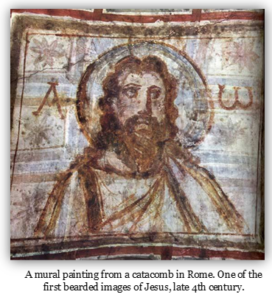 What do we know about the historical Jesus?
When Christian, Jewish, and secular historians from early history and contemporary times describe Jesus of Nazareth, they all agree that Jesus was a real historical person in first-century Palestine. He was a Jew from Galilee who was a rabbi (teacher) that had amassed a large group of followers. His message focused on the Kingdom of God, and he was known to be a miracle worker and healer. Jesus’ public ministry ultimately brought him into conflict with the Jewish religious leaders, and he was executed by crucifixion under the Roman governor Pontius Pilate around AD c. 30-33.
But where historians begin to differ is how he understood his own identity: as the Messiah, a prophet, the Son of God or an apocalyptic figure. The nature of his miracles is also contested; some interpret them as naturally explained, symbolic, or myths that were fabricated throughout the ages. Finally, his resurrection is also widely debated. While historians generally agree that Jesus’ followers genuinely believed Jesus rose from the dead, explanations for the resurrection vary from historical affirmation to theories of generated myths to deceptive narratives.
What did the early secular historians record about Jesus?
Flavius Josephus (AD 37–AD 100), who was a Roman and Jewish historian and military leader in the first century, is best known for his historical writings of the Jewish War and his comments about this man named Jesus. Now Josephus was not a Christian but a Jewish historian who had defected to the Roman leadership and was granted Roman citizenship. As a result, his writings were not recorded from a Christian’s perspective but from someone who
documented contemporary events as a historian and in an objective manner.
In his book, Antiquities of the Jews, Josephus wrote, “About this time there lived Jesus, a wise man, if indeed one ought to call him a man. For he was one who performed surprising deeds and was a teacher of people who accept the truth gladly. He won over many Jews and many of the Greeks. He was the Christ. When Pilate, upon hearing him accused by men of the highest standing among us, had condemned him to be crucified, those who had first come to love him did not give up their affection for him. On the third day he appeared to them restored to life, for the prophets of God had prophesied these things and a thousand other marvels concerning him.”[2]
This is an astonishing description of Jesus from Josephus, who was not a Christian yet was able to capture what the followers of Jesus were professing about him just a few decades after his death. Josephus recorded that Jesus was a teacher who acquired many Jewish and Greek followers. Now Josephus, who was raised in the Jewish faith, understood the Hebrew term Messiah (anointed one) written about in the Old Testament, who was to become a lasting King of the Israelites. In Greek, “Messiah” translates to “Christ”; therefore, when Josephus identified Jesus as the Christ, he either believed Jesus to be the anointed one and the King of the Jews or was just reporting what the followers of Jesus believed to be the case. The most fascinating aspect of this excerpt from his book was Josephus’ account that Jesus was condemned by Pontius Pilate and was crucified and, on the third day, appeared to many of his followers alive, just as the prophets had prophesied in the Old Testament.
Tacitus (AD 56 – AD 120) was also a Roman
historian and politician. Tacitus is widely regarded as one of the greatest Roman historians by modern scholars. In his writings of Annals, he mentions Jesus “Christus,” who suffered under Pontius Pilate during Tiberius’ reign.[3] This is a significant confirmation of Jesus’ execution.
Pliny the Younger (AD 61–AD 113) was a lawyer, author, and magistrate of Ancient Rome. He was known to have written hundreds of letters… over 200 that survived. In his letters to the Emperor Trajan, he referenced Christians worshipping Christ “as God” and wrote about their ethical practices.[4] This gives us some insight into early Christian worship and their understanding of Jesus as God.
Suetonius (AD 69–AD 122) was a Roman historian who wrote during the early Imperial era of the Roman Empire. Suetonius mentions Jesus indirectly, writing that Emperor Claudius expelled Jews from Rome because they were causing constant disturbances “at the instigation of Christ,” which was related to the spread of Christianity in Rome. Suetonius also mentions Christians when describing Nero’s punishments after the Great Fire of Rome. This provided additional evidence that Jesus’ followers were active in the Roman Empire.
There are dozens of extra-biblical books written during this ancient period of history that testify to the person of Jesus, his life, and his ministry.[5]
What do contemporary secular scholars say
about Jesus?
Below, I’ve provided a few direct quotations from well-known contemporary secular and Jewish historians regarding the historical Jesus. Keep in mind that these historians, by and large, disagree with the Christian point of view about the identity of Jesus. Their statements are only meant to provide support for the historical view of Jesus. Let’s examine what their scholarship reveals.
Bart D. Ehrman, who is an agnostic historian, remarked that “Jesus certainly existed, as virtually every competent scholar of antiquity, Christian or non-Christian, agrees.”[6] Ehrman also acknowledged that, “The crucifixion of Jesus by the Romans is one of the most secure facts we have about his life.”[7]
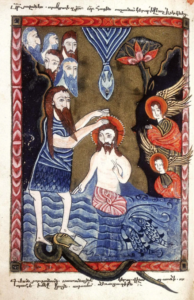 Ed Parish Sanders, who was a New Testament scholar and Protestant theologian, wrote, “Jesus was born about 4 BCE… spent his childhood and early adult years in Nazareth… was baptized by John the Baptist… and was crucified by the Romans.”[8]
Géza Vermes, who was a British academic, Biblical scholar, and Judaist of Jewish–Hungarian descent, remarked, “Jesus the Jew was a historical person who lived in Galilee and Judea in the first third of the first century CE and was executed by the Romans.”[9]
In summary, based on both the testimony of these extra-biblical ancient manuscripts and the views of modern secular scholars cited above, there exists convincing evidence that Jesus was a historical person, a Jewish teacher who had a large following, and someone who was claimed to perform miracles and was crucified by Pontius Pilate at around AD 30-33. In our next article we will take a deep look into the biblical claims about Jesus, including what the Old Testament prophets, disciples, and the early church viewed Jesus to be.
ENDNOTES
[1] Hannah and Kiersten Willaimson, Asking Strangers who they think Jesus is, YouTube, Jan 16, 2023, https://www.youtube.com/watch?v=a9-k4Dl40jI&t=743s
[2] Flavius Josephus, Antiquities
of the Jews, Book 18, Chapter 3, §3, trans. William Whiston (1737),
https://www.gutenberg.org/ebooks/2848
[3] Tacitus, Annals, 15.44.
[4] Pliny the Younger, Letters,
10.96.
[5] Flavius Josephus, Antiquities of
the Jews, trans. William Whiston (1737), Book 18, Chapter 3, §3,
https://www.gutenberg.org/ebooks/2848.
Tacitus, The Annals, trans. Alfred John Church and William
Jackson Brodribb (1876), Book 15, §44, https://www.perseus.tufts.edu/hopper/text?doc=Tac.+Ann.+15.44.
Suetonius, The Twelve Caesars, trans. Robert Graves (1957), Life
of Claudius 25.4.
Pliny the Younger, Letters, Book 10, Letter 96, trans. Betty
Radice, Penguin Classics (1969),
https://www.tertullian.org/fathers/pliny_letters_10.htm.
Babylonian Talmud, Sanhedrin 43a, trans. I. Epstein (1935–1938).
Bart D. Ehrman, ed., The Apostolic Fathers, 3rd ed., trans. Bart
D. Ehrman (Loeb Classical Library, 2003).
[6] Bart D. Ehrman, Jesus:
Apocalyptic Prophet of the New Millennium (Oxford: Oxford University Press,
1999), 229.
[7] Bart D. Ehrman, Jesus:
Apocalyptic Prophet of the New Millennium (Oxford: Oxford University Press,
1999), 229.
[8] E. P. Sanders, The Historical
Figure of Jesus (London: Penguin Books, 1993), 10–11.
[9] Géza Vermes, Jesus the Jew: A
Historian’s Reading of the Gospels (London: SCM Press, 1973), 21.