
I can remember going to a local carnival with some friends when I was a child and stumbling across a fortune teller’s booth occupied by this mysterious-looking adult who was dressed in a robe and a cloth band around his head (you get the picture). At the top of his booth was posted “Learn about your future” or some similar wording. I was intrigued that someone could tell me what my future would be like by just looking at the wrinkles of my palm.
 So, like many other kids who attended the carnival that day, I gave up a 25-cent ticket to have him reveal my hidden future. Naturally, the fortune teller’s prediction was so vague it didn’t resemble my future in the slightest, just an expensive reminder that no person truly has the power to see what lies ahead. I learned much later that only God can foresee into the future and reveal through biblical prophecies what will occur in our world and for mankind. Let me share with you what I learned.
In the previous article we examined a sample of archaeological evidence related to the Bible and found that these and many other findings appear to support the historical reliability of Scripture, and even more so as new discoveries are uncovered in modern day. However, archaeological data alone cannot establish divine inspiration. In this article, we will examine biblical prophecy to determine whether there is evidence to support the claim of God’s inspiration of the text.[1]
Biblical prophecy is undeniably challenging, yet it is one of the most fascinating and rewarding areas of study in God’s Word. In its simplest terms, a prophecy can be defined as a declaration or prediction. Biblical prophecy refers to a divinely inspired message from God to a prophet reflecting God’s will or plans for his people and the world. The Greek word for prophecy (prophēteía) signifies “the speaking forth of the mind and counsel of God.”[2]
When discussing prophecy, we need to make a clear distinction between forthtelling and foretelling. Many people incorrectly assume that all prophecies are foretelling, in other words, predictive in nature. So, let’s take a deeper look at these two forms of prophecy.
Forthtelling is a prophetic message, from God to the prophet, that exhorts, builds up, and strengthens the people hearing it. It might be a command or a warning that the prophet spoke to the people to repent. An example of forthtelling was when Moses spoke to the Israelites about observing the Sabbath. In this passage God instructs Moses on what to say. Then the Lord said to Moses, “Say to the Israelites, ‘You must observe my Sabbaths. This will be a sign between me and you for the generations to come, so you may know that I am the Lord, who makes you holy.” (Exodus 31:12-13)
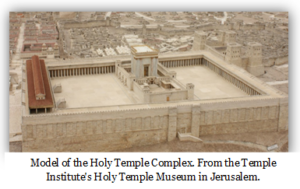 Foretelling is a prophetic message from God to a prophet that reveals insight into a future time, event, or place. Foretelling is given to declare to others a prediction of what is to come. An example of foretelling a future event in the Bible occurred when some of Jesus’ disciples remarked about how the temple was adorned with beautiful stones and with gifts dedicated to God. But Jesus said, “As for what you see here, the time will come when not one stone will be left on another; every one of them will be thrown down.” (Luke 21:5-6) In AD 70 Roman soldiers surrounded and captured the Jews confined in the city of Jerusalem and dismantled the temple building stone by stone.[3]
Why are predictive prophecies so important in assessing the reliability of the Bible?
The Purpose of Predictive Prophecies
Foretelling prophecies has several purposes for the hearer. Dr. Robertson McQuilkin, who was president of Columbia International University, explained it this way: “There are two purposes for predictive prophecy. The chief purpose is to affect the conduct of those who hear the prophecy. Another purpose is met only when the prophecy is fulfilled. That purpose is to build faith, to establish confidence in the God who miraculously foretold events.”[4]
One example of a faith-building predictive prophecy was given by Jesus, who was celebrating his last Passover meal with his disciples. In this event Jesus foretold about his imminent death and resurrection to strengthen his disciple’s faith when his prophecy was fulfilled. Jesus said, “You heard me say, ‘I am going away and I am coming back to you.’ If you loved me, you would be glad that I am going to the Father, for the Father is greater than I. I have told you now before it happens, so that when it does happen you will believe.” (John 14:28-29)
The Odds of Fulfilling Prophecies
Peter Stoner is a Christian writer and Professor Emeritus of Science at Westmont College and Professor Emeritus of Mathematics and Astronomy at Pasadena City College. Stoner calculated the mathematical probability of one person fulfilling numerous centuries-old Messianic prophecies within his lifetime. Let’s hear what Stoner claims about using the modern science of probability in reference to eight prophecies. “We find that the chance that any man might have lived down to the present time and fulfilled all eight prophecies is 1 in 10**17. That would be 1 in 100,000,000,000,000,000. In order to help us comprehend this staggering probability, Stoner illustrates it by supposing that “we take 10**17 silver dollars and lay them on the face of Texas. They will cover all of the state two feet deep. Now mark one of these silver dollars and stir the whole mass thoroughly, all over the state. Blindfold a man and tell him that he can travel as far as he wishes, but he must pick up one silver dollar and say that this is the right one. What chance would he have of getting the right one? Just the same chance that the prophets would have had of writing these eight prophecies and having them all come true in any one man.”
Dr. Hugh Norman Ross, who is a Canadian astrophysicist, Christian apologist, and old-Earth creationist, commented about Stoner’s probability mathematics in his book, The Creator and the Cosmos. Ross noted that these calculations serve as cumulative evidence for supernatural inspiration rather than strict mathematical proof.[5] Ross’ point was that his support for Stoner’s probability calculations regarding the fulfillment of these eight prophecies strongly suggests divine inspiration.
Going one step further, Stoner considers 48 prophecies and says, “We find the chance that any one man fulfilled all 48 prophecies to be 1 in 10**157, or 1 in 100,000,000,000,000,000,000,000,000,000,000,000,000,000,000,000,000,000,000,000,000,000,000,000,000,000,000,000,000,000,000,000,000,000,000,000,000,000,000,000,000,000,000,000,000,000,000,000,000,000,000,000. The estimated number of electrons in the universe is around 10**79. It should be quite evident to the harshest critic that Jesus did not fulfill these prophecies by accident.”[6]
Now consider that Old Testament scholars have determined there exist over three hundred prophetic references to the coming Messiah. All of these prophecies were fulfilled in the life of Jesus Christ as recorded in the New Testament.[7] Also noteworthy is the fact that critics have not found any Messianic prophecies in the Old Testament that were ‘not’ fulfilled in the life of Christ.
How do we know that these Messianic prophecies were really fulfilled?
Messianic Prophecies Fulfilled
Josh McDowell is an American Evangelical Christian apologist and evangelist. He is the author or co-author of over 150 books. In The New Evidence that Demands a Verdict, McDowell lists 61 major Messianic predictive prophecies, where convincing evidence exists for their fulfillment by Jesus Christ in the gospels. As a result, McDowell believes these prophecies effectively demonstrate the Bible’s prophetic reliability and truthfulness.[8]
The following information in Table 1: Sample of Old Testament Prophecies, represents a small sample of McDowell’s Old Testament references about the Messiah. I’ve included it to give you an idea of the types of predictive prophecies that exist in the Bible. An updated and expanded edition of this classic apologetics text is a collaboration by Josh McDowell and his son Sean McDowell. Refer to this book for a more detailed explanation for each of these 61 prophecies.[9]
|
Messianic Prophecy | Old Testament Reference | Fulfillment |
Born of a woman | Genesis 3:15 | Galatians 4:4 |
Born of a virgin | Isaiah 7:14 | Matthew 1:18, 24, 25 |
Son of God | Psalm 2:7 | Matthew 3:17 |
Seed of Abraham | Genesis 22:18 | Matthew 1:1 |
Family line of Jesse | Isaiah 11:1 | Luke 3:23, 32 |
Born at Bethlehem | Micah 5:2 | Matthew 2:1 |
Cast lots for garments. | Psalm 22:18 | John 19:23, 24 |
Another Christian apologist who is convinced about the prophetic reliability of the Bible is Dr. Hugh Norman Ross, who I referred to above. In one of his recent blogs, he remarked, “Unique among all books ever written, the Bible accurately described the human condition and offered a response to it—in the person of Jesus. It also consistently predicted future scientific discoveries and future specific events, places, and even names in human history—in detail—many decades, centuries, or millennia in advance.”[10]
What is the origin of these predicted prophecies?
Origin of Predicted Prophecies
The apostle Peter, in his letter to the churches, wrote about the origin of biblical prophecies when he stated, “Above all, you must understand that no prophecy of Scripture came about by the prophet’s own interpretation of things. For prophecy never had its origin in the human will, but prophets, though human, spoke from God as they were carried along by the Holy Spirit.” (2 Peter 1:20-21) In this passage Peter emphasized the point that God is the sole source of these biblical prophecies, including the predictive prophecies about Jesus as the Messiah and Son of God. In fact, biblical scholars have estimated there exist approximately 1,800–1,900 predictive prophecies in the Bible, of which over 1,500 have already been fulfilled![11]
So where does this leave us in validating the prophetic reliability of Scripture?
It is irresponsible to completely dismiss such considerable evidence about the Bible’s predictive prophecies. If we agree that these biblical prophecies have merit, then that provides a strong argument that only God could have inspired authors from diverse backgrounds, locations, and eras to accurately foretell future events about his Son and his earthly mission. If you are still skeptical, this evidence provides a starting point to explore these predictive prophecies in more detail and decide for yourself whether they are true.
I am reminded of the following Old Testament passage that makes a reference to God’s prophecies: “I am God, and there is no other; I am God, and there is none like me. I make known the end from the beginning, from ancient times, what is still to come. I say, ‘My purpose will stand, and I will do all that I please.’” (Isaiah 46:9-10) In this passage our God is claiming to be the legitimate and only God. There is none like him among the world’s other religions. Furthermore, God proves his legitimacy by inspiring his prophets throughout history to make predicted prophecies about future events as a sign of his supreme power.
Think about this for a moment… There is no other religion in the world, throughout history, that has a god who is able to inspire his followers to foretell events in the future. To the person who is seeking the one true God, this evidence is overwhelming and compelling.
When we read and examine the Bible’s predictive prophecies, we find compelling evidence to suggest God’s hand and inspiration in the biblical text. A logical extension of this argument is God’s master plan in revealing himself to us is not only evident through predictive prophecies but also through spiritual inspiration contained in the Bible text, just as God’s Word reveals. But what about the Bible vs. science? Modern science seems to be in frequent disagreement with many of the statements about the behavior of nature as described in the Scriptures. Get ready, as we embark on a whirlwind journey to uncover the Bible’s scientific reliability in the next article.
ENDNOTES
[1] Portions of this section are adapted from my previously published small group series by Robert A. Mimiaga and Lew Davies, “Can You Really Trust the Bible?” (New Hope Church, Bend, OR, 2011)
[2] W. E. Vine, Vine’s Complete Expository Dictionary of Old and New Testament Words (Nashville: Thomas Nelson, 1996), 492.
[3] Josephus on the dismantling of the Temple (AD 70) “Caesar gave orders that they should now demolish the entire city and temple… it was so thoroughly laid even with the ground by those that dug it up to the foundation, that there was left nothing to make those that came thither believe it had ever been inhabited.”
Flavius Josephus, The Jewish War, Book VII, 1.1
[4] Robertson McQuilkin, Understanding and Applying the Bible (Chicago: Moody Publishers, 2009)
[5] Hugh Ross, The Creator and the Cosmos: How the Latest Scientific Discoveries Reveal God, 3rd ed. (Colorado Springs, CO: NavPress, 2001), 198n11.
[6] Stoner, Peter W. Science Speaks: Scientific Proof of the Accuracy of Prophecy and the Bible. Chicago: Moody Press, 1963.
[7] Josh McDowell, Evidence That Demands a Verdict — “The Old Testament, written over a 1,000‑year period, contains several hundred references to the coming Messiah…” (citing Floyd Hamilton’s count of 332 fulfilled predictions).
[8] Josh McDowell, The New Evidence That Demands a Verdict (Nashville: Thomas Nelson, 1999), 168.
[9] Josh McDowell and Sean McDowell, The New Evidence That Demands a Verdict (Nashville, TN: Thomas Nelson, 1999).
[10] Hugh Ross, Fulfilled Prophecy: Evidence for the Reliability of the Bible, Reasons to Believe, March 25, 2024, https://reasons.org/explore/blogs/todays-new-reason-to-believe/fulfilled-prophecy-evidence-for-the-reliability-of-the-bible
[11] J. Barton Payne, Encyclopedia of Biblical Prophecy (Grand Rapids: Baker Book House, 1973), 665–670.