
As a young boy, I remember treasuring my first baseball glove and using it to play in my local Little League team (the Dodgers), as well as in countless playground games with my neighborhood friends. It was the first possession I really worked hard to preserve by keeping it clean and occasionally applying leather oil to the glove’s surface to soften the mutt’s leather and restore its color. It taught me a simple lesson that working to preserve something important in your life takes care and time. In the most elementary way, this example of preserving something valuable is analogous to the care manuscript scribes took to preserve the Bible’s texts throughout the ages.
In our last article, we discussed the Bible’s self-claims to gain a better understanding of what it reports itself to be. In this article we will examine the modern methods used to evaluate the preservation of Old Testament manuscripts.
Textual Criticism
The primary systematic method textual critics (ancient manuscript scholars) utilize to determine the quality of an ancient manuscript’s preservation is called textual criticism. This is a scholarly method to study, compare, and evaluate ancient manuscripts in order to determine, as closely as possible, what the original texts revealed. This process is widely used to assess the preservation of all ancient secular writings, in addition to the Bible’s Old and New Testament manuscripts. A more detailed explanation of this textual criticism process will be given in our next article.
It is helpful to understand that the Bible is really a collection of 66 books: 39 in the current Old Testament and 27 in the New Testament. The Old Testament writings originated from c. 1400 to 400 BC, and the New Testament documents are dated from c. AD 45 to AD 95. Therefore, textual critics must view and research these two testament writings differently.
Because the Old Testament manuscripts were originally written millennia earlier, there exists less information about the text’s authorship, audience, purpose, and date markers to identify the time of its writing. In addition, most of the Old Testament documents were written on a scroll or later in codex form (individual pages bound together), made from sheets of papyrus (from the papyrus plant native to Egypt) or parchment (sheets made from animal skin). Although the codex form is known to have existed by the late first century AD—evidenced by a reference from the Roman poet Martial (c. AD 85)—it did not gain widespread adoption until the fourth century.[1]
The Masoretic Text
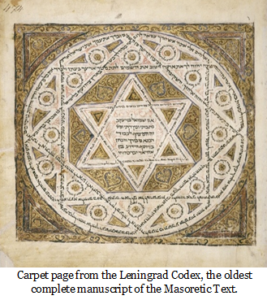
Another challenge facing Old Testament textual critics is the limited number of manuscript copies that are available. For this reason, the textual critics have relied on The Masoretic Text (MT), which is not a single manuscript but a textual tradition maintained by the Jewish scribes between c. AD 600 and 1000. Within this family of documents is the Leningrad Codex (AD 1009), which is the only complete ancient manuscript of the Hebrew Bible during this period. The Aleppo Codex (AD 925), the Cairo Codex of the Prophets (AD 896), and others contain significant portions of text but are not complete. [2]
Have archaeologists unearthed any scrolls of the Old Testament manuscripts that predate these Masoretic-style writings?
Ketef Hinnom Scrolls
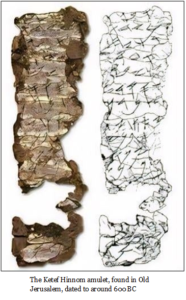
Perhaps one of the greatest archaeological finds was discovered in 1979 in Ketef Hinnom are two tiny silver scroll amulets[3] excavated near Jerusalem, which date to around 600 BC and contain part of the priestly blessing found in Numbers 6:24–26, which states, “The Lord bless you and keep you; the Lord make his face shine on you and be gracious to you; the Lord turn his face toward you and give you peace.”
These are currently the oldest surviving texts that contain words now found in the Hebrew Bible, predating the Dead Sea Scrolls by about 500 years.
The 2004 Ketef Hinnom archaeology team described the scrolls as one of the most significant discoveries ever made for biblical studies. Apart from their significance for modern knowledge of the development of the Hebrew alphabet, the scrolls “preserve the earliest known scriptures also found in the Old Testament Bible and the earliest examples of confessional statements concerning Yahweh.”[4]
According to the team that led the most conclusive reexamination of the scrolls, their conclusion stated that, “Based on our new analysis and reading of these texts, we can reaffirm with confidence that the late preexilic period (the time before the Babylonian exile of the Jewish people) is the proper chronological context for the artifacts. We can further reassert the conclusion reached by most scholars: that the inscriptions found on these plaques preserve the earliest known citations of texts also found in the Hebrew Scriptures.”[5]
Consider for a moment that the Old Testament text you read in your Bible has the same text that was read by biblical readers more than 2,600 years ago. This truly underscores the accuracy of the Old Testament’s textual preservation!
 The Dead Sea Scrolls
Another collection of Old Testament text discovered that predates the Masoretic-style writings is a large collection of ancient Jewish manuscripts discovered in various caves in northern Israel at various times between 1946 and 1956. These manuscripts were written in Hebrew, Aramaic, and Greek and date from 250 BC to AD 70. One of the most well-known finds occurred in 1947, when three Bedouin shepherds stumbled across eight clay jars in a cave located in Qumran, Israel. One jar contained three scrolls: the complete Isaiah scroll, the community rule for the Qumran sect, and the Habakkuk commentary. Subsequently, four additional scrolls were discovered in the cave: a second version of the book of Isaiah; the War Scroll, which describes a war to be followed by judgment day; the Thanksgiving Scroll, containing forty Psalms of thanksgiving; and the Genesis Apocryphon. Over the next ten years, over 15,000 Dead Sea Scrolls and scroll fragments were discovered and identified and are currently held in the Shrine of the Book at the Israel Museum located in Jerusalem. Owing to the poor condition of some of the scrolls, scholars have not identified all of their texts. The identified texts fall into three general groups:
- About 40% are copies of texts from Hebrew scriptures.
- Approximately 30% are texts from the Second Temple period that ultimately were not canonized in the Hebrew Bible, such as the Book of Enoch, the Book of Jubilees, the Book of Tobit, the Wisdom of Sirach, Psalms 152–155, etc.
- The remainder (roughly 30%) are sectarian manuscripts of previously unknown documents that shed light on the rules and beliefs of a particular sect or groups within greater Judaism, such as the Community Rule, the War Scroll, the Pesher on Habakkuk, and The Rule of the Blessing.[6]
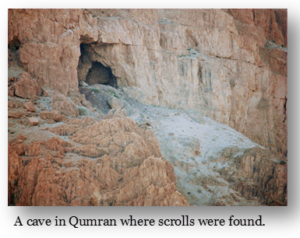 I’ve been fortunate to visit Qumran, which is near the northeastern shore of the Dead Sea. The terrain is rugged and extremely arid as well as hot most of the year, which contributed to the preservation of the parchment and papyrus artifacts for thousands of years.
The Dead Sea Scrolls are extremely important, especially for understanding the quality of preservation of the Hebrew Bible. These biblical scrolls from Qumran were dated at c. 100 BC, which is 900 to 1,000 years earlier than the previously discovered Masoretic manuscripts. Their significance is difficult to overstate for the following reasons. When scholars used textual criticism methods to compare the Dead Sea Scrolls with the later Masoretic manuscripts, they found remarkable consistency in wording and content and only minor variations, mostly spelling or word order. In addition, there were no doctrinally significant differences uncovered.
 The Septuagint (LXX)
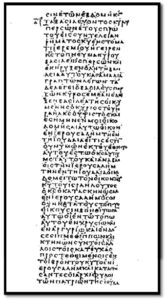
Another valuable set of Old Testament manuscripts that predates the Masoretic Text is called the Septuagint, which is a Koine Greek translation of the Hebrew Old Testament manuscripts. The Septuagint writings were created c. 285-247 BC.[7] The Roman numeral “LXX,” which often accompanies the title, represents the seventy or seventy-two translators who were commissioned to compose these translations at the request of Ptolemy II Philadelphus, pharaoh of the Ptolemaic Kingdom in Egypt.[8] The Septuagint, although written almost a thousand years before the Masoretic Text, shows biblical scholars a close alignment between the two.[9]
Regarding the core theological message of the texts, Emanuel Tov, who is a Dutch-Israeli biblical scholar and linguist and emeritus J. L. Magnes Professor of Bible Studies in the Department of Bible at the Hebrew University of Jerusalem, emphasizes that “theological differences between the LXX and MT are often exaggerated, and most divergences are either translational or stylistic rather than doctrinal.”[10] This supports the narrative that the Masoretic Text preserves the same theological substance known in the Second Temple period.
The table below, titled “Major Old Testament Manuscripts,” lists the significant Old Testament manuscripts with their approximate original written dates, for your perusal. As you can see, the Dead Sea Scrolls bridge the gap between the dates of the original Old Testament writings and the medieval manuscripts.
Considering the vast time span of these documents, along with the many languages into which they were translated, it is remarkable that their content has remained so consistent, reinforcing the textual preservation of the Old Testament. In the endnotes of this article, I’ve provided some additional literary information from contemporary biblical critics addressing the Old Testament’s textual preservation for your perusal.[11]
Major Old Testament Manuscripts
| Manuscript | Approx. Date Written | Language | Contents | Significance |
| Ketef Hinnom Silver Scrolls | c. 700–650 BC | Hebrew | Numbers 6:24–26 | Oldest known biblical text; confirms pre-exilic Scripture.[12] |
| Dead Sea Scrolls (DSS) | c. 250 BC – AD 70 | Hebrew, Aramaic, Greek | Portions of all OT books except Esther | The earliest substantial Hebrew manuscripts confirm textual stability.[13] |
| Septuagint (LXX) | c. 250–150 BC | Greek | Full OT (various manuscripts) | Early translation reflecting ancient Hebrew texts.[14] |
| Samaritan Pentateuch | c. 2nd century BC (earlier tradition) | Hebrew | Genesis–Deuteronomy | Independent textual tradition of the Torah.[15] |
| Aleppo Codex | c. AD 930 | Hebrew | Nearly complete OT (missing portions) | Highly accurate Masoretic manuscript.[16] |
| Leningrad Codex | AD 1008 | Hebrew | Complete Old Testament | Oldest complete Masoretic Bible; base text for modern editions.[17] |
| Masoretic Text (MT) | c. AD 600–1000 (tradition) | Hebrew | The Entire Old Testament | Authoritative Hebrew textual tradition.[18] |
| Latin Vulgate (Jerome) | c. AD 382–405 | Latin | Old Testament | Translation from Hebrew; influential in Western church.[19] |
In our next article we will learn about other techniques used by textual critics to evaluate the textual preservation of the New Testament manuscripts and discover some of their findings as we continue to investigate whether the Bible is a reliable pathway to God.
ENDNOTES
[1] C. H. Roberts and T. C. Skeat, The Birth of the Codex (Oxford University Press, 1987), 25, 42–44.
[2] Wendy Widder, “What Is Textual Criticism of the Bible? A Crash Course,” Logos, August 18, 2025, https://www.logos.com/grow/min-textual-criticism-of-the-bible/#easy-footnote-4-133504
[3] amulet – is a small object worn or carried because it is believed to protect the bearer from harm or bring good fortune. It was often a piece of jewelry and was common in the ancient cultures.
[4] Barkay, Gabriel, et al., “The Challenges of Ketef Hinnom: Using Advanced Technologies to Recover the Earliest Biblical Texts and their Context”, Near Eastern Archaeology, 66/4 (Dec. 2003): 162-171.
[5] Gabriel Barkay, Marilyn J. Lundberg, Andrew G. Vaughn and Bruce Zuckerman, “The Amulets from Ketef Hinnom: A New Edition and Evaluation, “Bulletin of the American Schools of Oriental Research 334 (2004): 41–71.
[6]Abegg, Jr., Martin; Flint, Peter; Ulrich, Eugene (2002). The Dead Sea Scrolls Bible: The Oldest Known Bible Translated for the First Time into English. San Francisco: Harper. pp. xiv–xvii. ISBN 0-06-060064-0. Retrieved 24 November 2023.
[7] Stefon, Matt (2011). Judaism: History, Belief, and Practice. The Rosen Publishing Group, Inc. p. 45. ISBN 978-1-61530-487-5.
[8] Aristeas of Marmora (1904). The Letter Of Aristeas, translated into English. Translated by St. John Thackeray, Henry. London: Macmillan. pp. 7–15
[9] Emanuel Tov, Textual Criticism of the Hebrew Bible, 3rd ed. (Minneapolis: Fortress Press, 2012), 134–142.
[10] Emanuel Tov, The Greek and Hebrew Bible (Leiden: Brill, 1999), 237–242.
[11] Philip R. Davies, In Search of “Ancient Israel” (Sheffield: JSOT Press, 1992), 121.
Thomas L. Thompson, The Mythic Past: Biblical Archaeology and the Myth of Israel (New York: Basic Books, 1999), 10–11.
- L. Noll, Canaan and Israel in Antiquity (Sheffield: Sheffield Academic Press, 2001), 164.
[12] Gabriel Barkay, “The Priestly Benediction on the Silver Plaques from Ketef Hinnom,” Biblical Archaeology Review 9, no. 2 (1983): 14–25.
[13] Peter W. Flint, The Dead Sea Scrolls (Nashville: Abingdon Press, 2013); James C. VanderKam, The Dead Sea Scrolls Today, 2nd ed. (Grand Rapids: Eerdmans, 2010).
[14] Karen H. Jobes and Moisés Silva, Invitation to the Septuagint, 2nd ed. (Grand Rapids: Baker Academic, 2015).
[15] Emanuel Tov, Textual Criticism of the Hebrew Bible, 3rd ed. (Minneapolis: Fortress Press, 2012), 80–88.
[16] Ernst Würthwein, The Text of the Old Testament, 2nd ed. (Grand Rapids: Eerdmans, 1995), 20–40.
[17] Biblia Hebraica Stuttgartensia, 5th ed. (Stuttgart: Deutsche Bibelgesellschaft, 1997), xii–xv.
[18] Ernst Würthwein, The Text of the Old Testament, 2nd ed. (Grand Rapids: Eerdmans, 1995), 20–40.
[19] Bruce M. Metzger, The Early Versions of the New Testament (Oxford: Oxford University Press, 1977), 344–359.